Government audits often feel intimidating because contractors assume auditors are hunting for perfection. In reality, DCAA and DCMA are evaluating discipline, consistency, and credibility far more than flawless paperwork. Understanding what auditors actually focus on — and what they largely ignore — helps contractors invest their time and resources where it truly matters.
BLUF
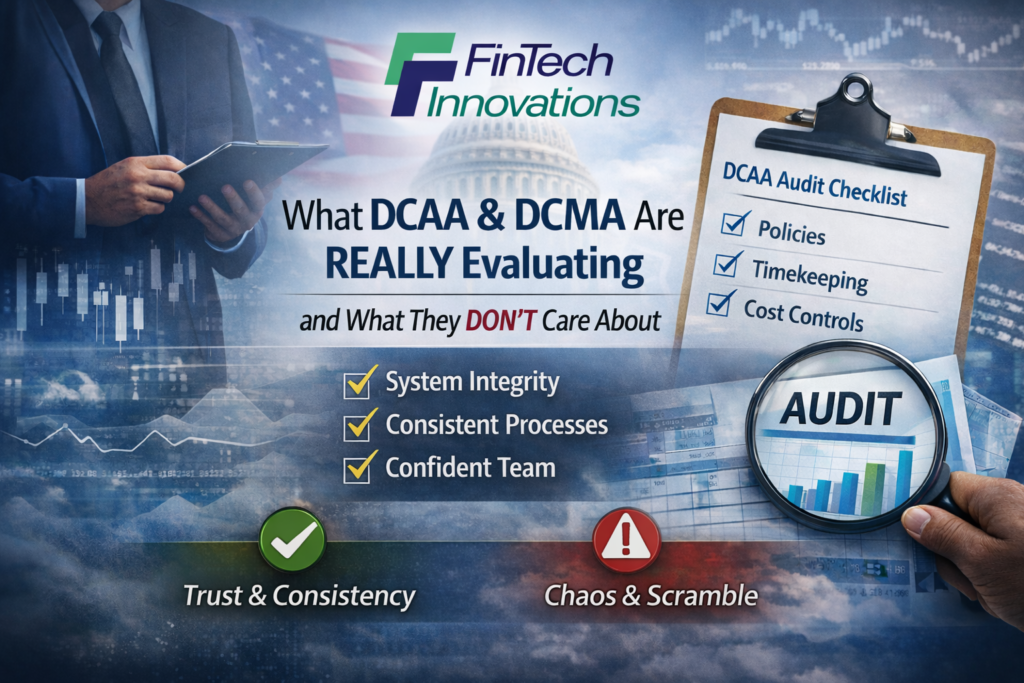
DCAA and DCMA auditors are not looking for perfection or beautifully formatted binders. They are evaluating whether your systems, controls, and people operate consistently with your stated policies and contractual requirements. Clear processes, reliable documentation, and confident, aligned responses signal maturity. Disorganization, inconsistencies, and uncertainty raise red flags — even if your numbers are technically correct.
Audits become stressful when contractors prepare for the wrong exam. Many organizations over-invest in cosmetic fixes while overlooking the fundamentals auditors rely on to assess risk and compliance posture.
Here’s what auditors are really evaluating — and what they don’t spend much time worrying about.
What Auditors Focus on First
1. System Integrity and Traceability
Auditors start by assessing whether your systems tell a consistent, traceable story.
They look at how labor flows from timekeeping to payroll to the general ledger, how costs are classified as direct or indirect, and whether financial reports can be traced back to source records. If transactions reconcile cleanly and audit trails are intact, confidence builds quickly.
Breaks in traceability, manual workarounds, or unexplained adjustments signal risk — regardless of how small the dollar amount may be.
2. Policy Alignment with Actual Practice
Written policies matter, but only if operations follow them.
Auditors routinely compare stated procedures against real behavior:
-
Are employees trained on timekeeping rules?
-
Do supervisors review and approve labor consistently?
-
Are cost allocations applied the same way month after month?
When practice diverges from policy, auditors see a control weakness. Consistency matters more than theoretical compliance.
3. Management Awareness and Ownership
Auditors pay close attention to leadership engagement.
They assess whether managers understand how the business operates financially, can explain cost structures, and take ownership of compliance processes. Leaders who can confidently describe systems and controls signal maturity. Leaders who defer basic questions or appear disconnected raise concern.
Audit readiness is as much about leadership involvement as it is about accounting.
Signals of Maturity vs. Red Flags
Signs of a Mature Organization
-
Clear, repeatable processes followed consistently
-
Organized documentation available without scrambling
-
Employees who understand their roles in compliance
-
Calm, direct responses during interviews
-
Minor issues acknowledged with corrective actions already underway
These organizations rarely experience prolonged or contentious audits.
Red Flags Auditors Notice Quickly
-
Multiple versions of the same report
-
Last-minute policy updates created just before the audit
-
Inconsistent explanations from different team members
-
Heavy reliance on spreadsheets with no controls
-
“We usually do it this way” answers with no documentation
Even small inconsistencies can erode auditor confidence.
What Auditors Largely Don’t Care About
Perfect Formatting and Presentation
Auditors are not grading design or aesthetics. Clean data and clear explanations matter far more than polished templates or elaborate dashboards.
Overly Complex Controls
Complexity is not sophistication. Controls that no one understands or consistently follows are a liability, not an asset. Auditors prefer simple, well-executed processes over elaborate systems that break down in practice.
One-Time Cleanup Efforts
Temporary fixes implemented solely for the audit window are easy to spot. Auditors look for evidence that controls operate continuously, not just when scrutiny is expected.
How Preparedness Shows Up in Interviews and Walkthroughs
Prepared organizations answer questions consistently across finance, operations, and leadership. Team members understand how their actions affect compliance and can explain processes without coaching.
During walkthroughs, auditors look for alignment between what they hear and what they see. When explanations match system behavior and documentation, audits move efficiently. When they don’t, deeper testing follows.
Preparedness feels calm. Scramble feels loud.
Audit Readiness Is About Credibility
DCAA and DCMA audits are ultimately risk assessments. Auditors are evaluating whether they can rely on your systems, your data, and your people. When credibility is established early, audits become structured conversations rather than investigations.
The most successful contractors don’t aim for perfection. They build disciplined, repeatable operations that stand up to routine scrutiny.
If you want to improve audit outcomes, stop preparing for what you think auditors want to see. Start aligning daily operations with what they actually evaluate. That shift reduces findings, shortens audits, and strengthens your reputation in the GovCon marketplace.